


The Arts and Crafts Movement: Where Beauty Meets Purpose
-
Poised for battle (Blush), Poster
Regular price From CA$18.95Regular priceUnit price per -
Poised for battle (Ivory), Poster
Regular price From CA$18.95Regular priceUnit price per -
Little Blue Dragons, Poster
Regular price From CA$18.95Regular priceUnit price per -
Prince in Lilac, Poster
Regular price From CA$18.95Regular priceUnit price per -
Chateau in Blue, Poster
Regular price From CA$18.95Regular priceUnit price per -
Minty Moth, Poster
Regular price From CA$18.95Regular priceUnit price per -
Brave Little Mouse, Poster
Regular price From CA$18.95Regular priceUnit price per -
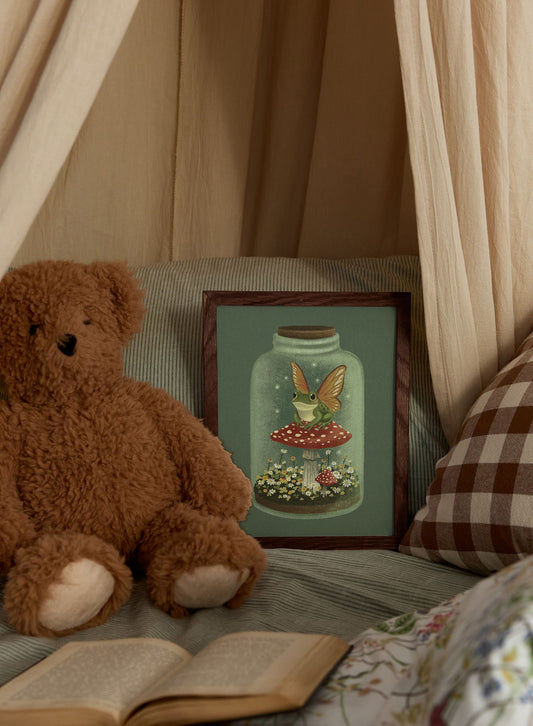
Little Froggy Pond, Poster
Regular price From CA$18.95Regular priceUnit price per -
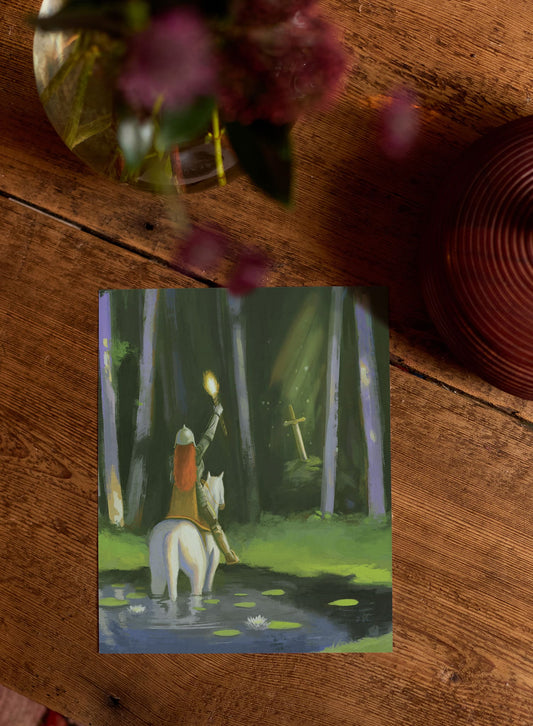
Sword in the Stone, Poster
Regular price From CA$18.95Regular priceUnit price per -
Be Bold Knight (Royal Blue), Poster
Regular price From CA$18.95Regular priceUnit price per -
Dragon Play, Poster
Regular price From CA$18.95Regular priceUnit price per -
Little Unicorn, Poster
Regular price From CA$18.95Regular priceUnit price per -
Be Bold Knight (Scarlet), Poster
Regular price From CA$18.95Regular priceUnit price per -
Fiddlin' Foxes, Poster
Regular price From CA$18.95Regular priceUnit price per -
Swan Song, Poster
Regular price From CA$18.95Regular priceUnit price per -
Dawn Moth, Poster
Regular price From CA$18.95Regular priceUnit price per -
Girl Boss, Poster
Regular price From CA$18.95Regular priceUnit price per -
Lion Resplendent, Poster
Regular price From CA$18.95Regular priceUnit price per -
Fox in the Field Tapestry, Poster
Regular price From CA$18.95Regular priceUnit price per -
Tiny Toadstool , Poster
Regular price From CA$18.95Regular priceUnit price per -
Chilvalry, Poster
Regular price From CA$18.95Regular priceUnit price per -
Unicorn Meadow, Poster
Regular price From CA$18.95Regular priceUnit price per -
A Snowy Visit, Poster
Regular price From CA$18.95Regular priceUnit price per -
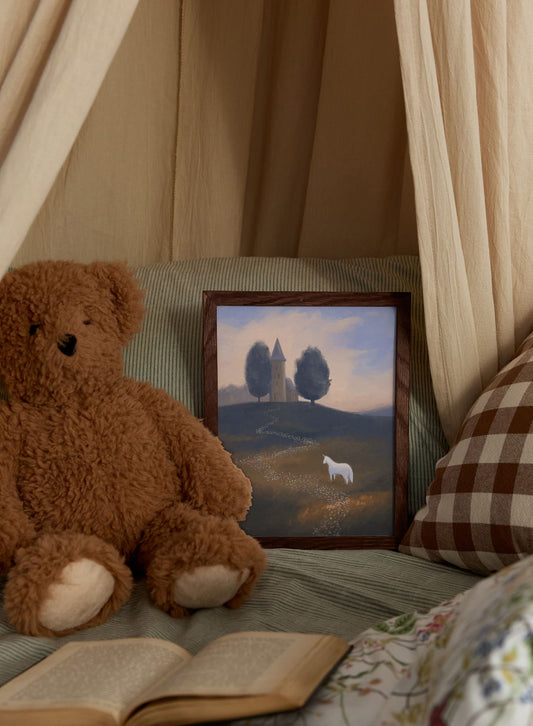
Littlest Castle, Poster
Regular price From CA$18.95Regular priceUnit price per -
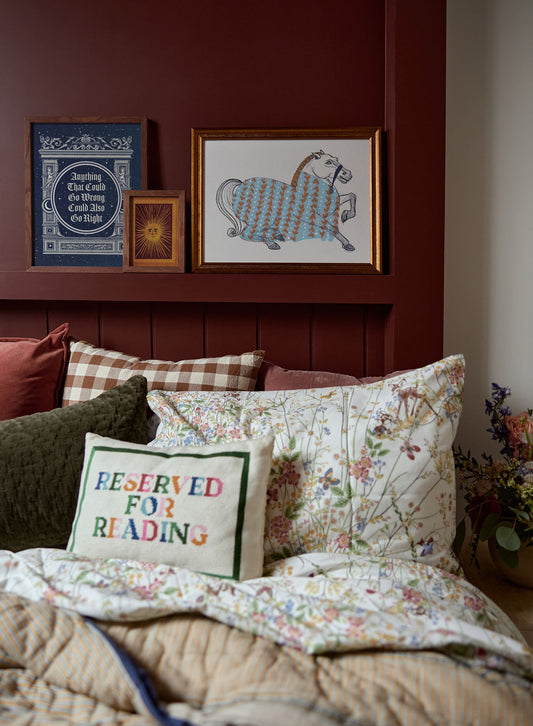
Ornate Equine II, Poster
Regular price From CA$17.95Regular priceUnit price per








“We Just Don’t Make Things as We Used To.”

To understand the Arts and Crafts Movement (1880-1920), we first must understand the world in which it was reacting to. In this case, that means the Industrial Revolution in Britain.
When we think about the Industrial Revolution, we probably think of the major headline changes attributed to the turn of the century. We are reminded of the invention of the modern factory, the electrification of our homes and businesses, and the explosion of affordable goods and services that came with these major technical achievements. For the first time in ordinary people’s lives, one could fill their home with textiles, furniture, and ceramics that would have been unthinkable luxuries just a generation earlier.
*Pictured: Interior of a Cotton Mill (1908), photographed by Lewis Wickes Hine. A glimpse into industrial-era textile production. Image: Library of Congress, via Wikimedia Commons (Public Domain).

Not everyone saw this change as a positive one. Several artists, designers, architects and thinkers believed that machine-made factory production was leading to a degradation of art and craft. Goods were now cheaper, yes, but they were thinner, flimsier, and unoriginal. Critics despised this decline in quality.
It’s a common complaint to hear that “we just don’t make things like we used to.” This was essentially what figures like William Morris, Walter Crane, and John Ruskin were saying in the mid-ninteenth century. These artists argued not just for better quality in goods but, for the manufacture of these goods in ethical ways. It is out of this argument that came the movement that we now know as Arts and Crafts, which takes its name from the Arts and Crafts Exhibition Society, founded in London in 1887.
*Pictured: William Morris alongside pages from the preface to Arts and Crafts Essays (1893). A key figure in the Arts and Crafts Movement, Morris championed craftsmanship, artistic integrity, and the value of well-made everyday objects.

Importantly, figures of this movement were not “anti-machine,” they instead disliked the modern factory system, which broke apart the production of an object into small, separate, and menial tasks. In the modern factory, no worker would see the production of their object from start to finish. Under this system, no worker could develop skills to become an artisans or craftsperson. It was this deskilled labour that the Arts and Crafts Movement objected to.
Many of the movement’s artists, architects, and designers were also socialists, who campaigned for better working conditions and guild-based cooperative ownership. These thinkers advocated for “dignity of labour,” the idea that how something gets made is just as important as the finished object itself.
*Pictured: Standen House (1892–1894), designed by Philip Webb, featuring interiors by Morris & Co. Image: Michael Gaylard, via Wikimedia Commons (CC BY 2.0).

The movement’s true radicalism was its commitment to a complete change in design. Inspired by medieval craft traditions, its artists called for small-scale workshops, a revival of craft traditions, a renewed respect for the decorative arts, and a return to worker’s guilds. Techniques were revived and encouraged, such as enamelling, ceramics, embroidery, calligraphy, and woodcarving.
This movement was less about a single unified style, and was more focused on a set of ideals. Chief among them was a focus on object utility and what artists called a “truth in materials,” meaning wood would look like wood, and marble would look like marble. These resulting objects were exceptionally crafted and featured simplified and natural motifs, a real contrast to the heavy ornamentation that was fashionable at the time. These objects were beautiful, and they were also built to last.
*Pictured: Chair in English Oak (1911) by Ernest W. Gimson. A fine example of Arts and Crafts craftsmanship and honest use of materials. Image: The Studio Yearbook of Decorative Art, via Wikimedia Commons (Public Domain).

While the movement’s end is dated to approximately 1920, it did not disappear so much as it evolved; the roots of the Art Nouveau movement can be traced back to the Arts and Crafts tradition. The movement had significant impact on architecture, including the use of local materials in building design. Modern design and today’s maker culture can in part trace its roots to the Arts and Crafts Movement.
Although the movement’s end can be dated to over 100 years ago, many of its key ideas remain strikingly relevant today. In our age of instant gratification and disposables, there is something magical about encountering real craftspeople and using well-made objects. The ethical production of our goods is something many of us now weigh when we shop. Wallpapers and prints designed during this movement are still sold today. And many of these ideas have gone on to inspire many of the works in the Fable Collection here at Opposite Wall. Luckily, beauty is everywhere, and you don’t need to have an art history degree to appreciate a beautiful object.
*Pictured: Feathered Beauties from Opposite Wall’s Fable Collection. With its enchanting imagery, romantic details, and old-world charm, this artwork echoes the Arts and Crafts Movement’s enduring love of nature, storytelling, and decorative beauty.


